The Legend of the Old Cow: Why Basque and Galician Beef is the World's Best
By Khristian Rueda · 21 May 2026
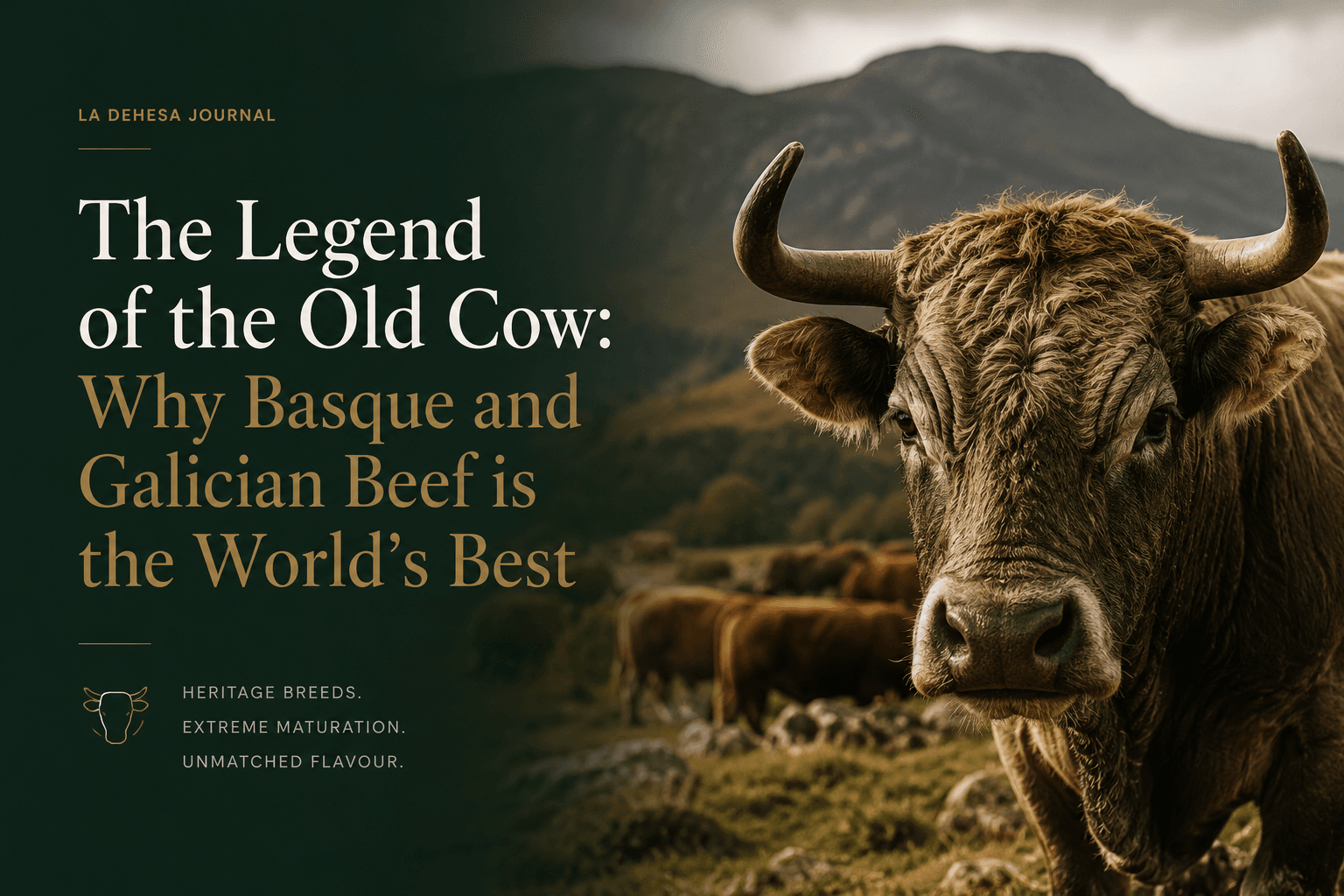
In the global hierarchy of luxury steaks, a new champion has emerged from the mist-covered mountains of Northern Spain. While most of the world prioritises young cattle for tenderness, the Basque Country and Galicia have pioneered a "profoundly beefy" revolution centred on Vaca Vieja (old cow), animals reared to an ancient mature age. This meat is often celebrated by Michelin-star chefs and connoisseurs as among the best in the world.
What Makes it Different: The Power of Age
The fundamental difference between Spanish Vaca Vieja and commercial beef is the time allowed for flavour to develop. Most international beef is slaughtered before three years of age; however, the Basque and Galician tradition prizes "superannuated" cattle that have lived fulfilled lives.
Aromatic Complexity: Much like the difference between lamb and mutton, older cattle develop deep, layered flavours that young animals cannot match. Tasters often report powerful notes of blue cheese, mushrooms, and earth.
Visual Cues: The meat is a distinct dark maroon or dark red colour. It is framed by a characteristic golden-yellow fat coat, which indicates a long life spent on lush pastures eating natural grasses.
Intramuscular Marbling: Unlike the heavy, industrial marbling of Wagyu, the Rubia Gallega breed develops a well-distributed, granular marbling that renders down during slow roasting to provide intense juiciness.
The Breeds and the Terroir
The excellence of this meat is a product of specific heritage breeds and a commitment to ancient animal husbandry.
Rubia Gallega: The queen of this sector is the Blonde Galician, a massive animal known for its golden-reddish coat and ability to produce exceptionally succulent meat.
Small-Scale Rearing: In Galicia, cattle are raised on small farms, often limited to just five head per owner, ensuring careful attention to each animal's welfare.
The Atlantic Diet: The cattle graze on meadows salinated by the proximity of the sea and are supplemented with corn, turnips, and collards grown in kitchen gardens. This specific diet permeates the fat, giving the steak its signature aroma of grass and milk.
The Basque Cider House Tradition
The cultural heart of this meat is the Basque Sagardotegi, or cider house. Historically, farmers would swap beef for local cider, leading to the tradition of eating Txuleton, enormous rib steaks, alongside apple wine.
The Ritual: In these traditional farmhouses, steaks as large as a human head are roasted over tilted, fine-rod Basque grills.
Technique, Osmosis: The maestros of the Basque kitchen emphasise bringing the meat to room temperature and using heavy sea salt to draw out moisture for 40 to 90 minutes before cooking. This creates a caramelised, crunchy outer crust while the centre remains absolutely blue.
Sustainability and Ethics
Beyond flavour, Vaca Vieja is viewed as a sustainable and ethical choice. By keeping cows and oxen until the end of their natural lives, farmers support the biodiversity of the Dehesa and Galician ecosystems, helping to preserve rural landscapes and ancient husbandry. This slow-ageing philosophy, where some pieces are matured for over 40 days, results in an inimitable product that has reset expectations for those accustomed to industrial alternatives.
Galician and Basque old cow meat is not just a food item; it is a gastronomic jewel that represents a stubborn refusal to sacrifice traditional quality for modern speed. For those seeking the ultimate steak, it offers a depth of character and a connection to the land that is simply unmatched.
Trade Enquiries
Get the La Dehesa brochure
Tell us your venue type and receive the current product range.
Browse the full range of Origin Verified Spanish products on the products page, or learn about our sourcing approach on the about page. Find out why Irish hospitality partners choose La Dehesa on why us.
Interested in listing these products at your venue?