
By Khristian Rueda · 30 April 2026
Black truffle is one of the few ingredients that can change the mood of a kitchen with very little product. The catch is that it only works when the season, the handling, and the menu are aligned. Teruel gives Irish chefs a reliable regional frame for that season because the province combines limestone soils, cold winter weather, and the kind of inland conditions Tuber melanosporum actually likes. La Dehesa curates that frame so buyers can work from a clear regional brief rather than a vague truffle fantasy.
The Teruel context
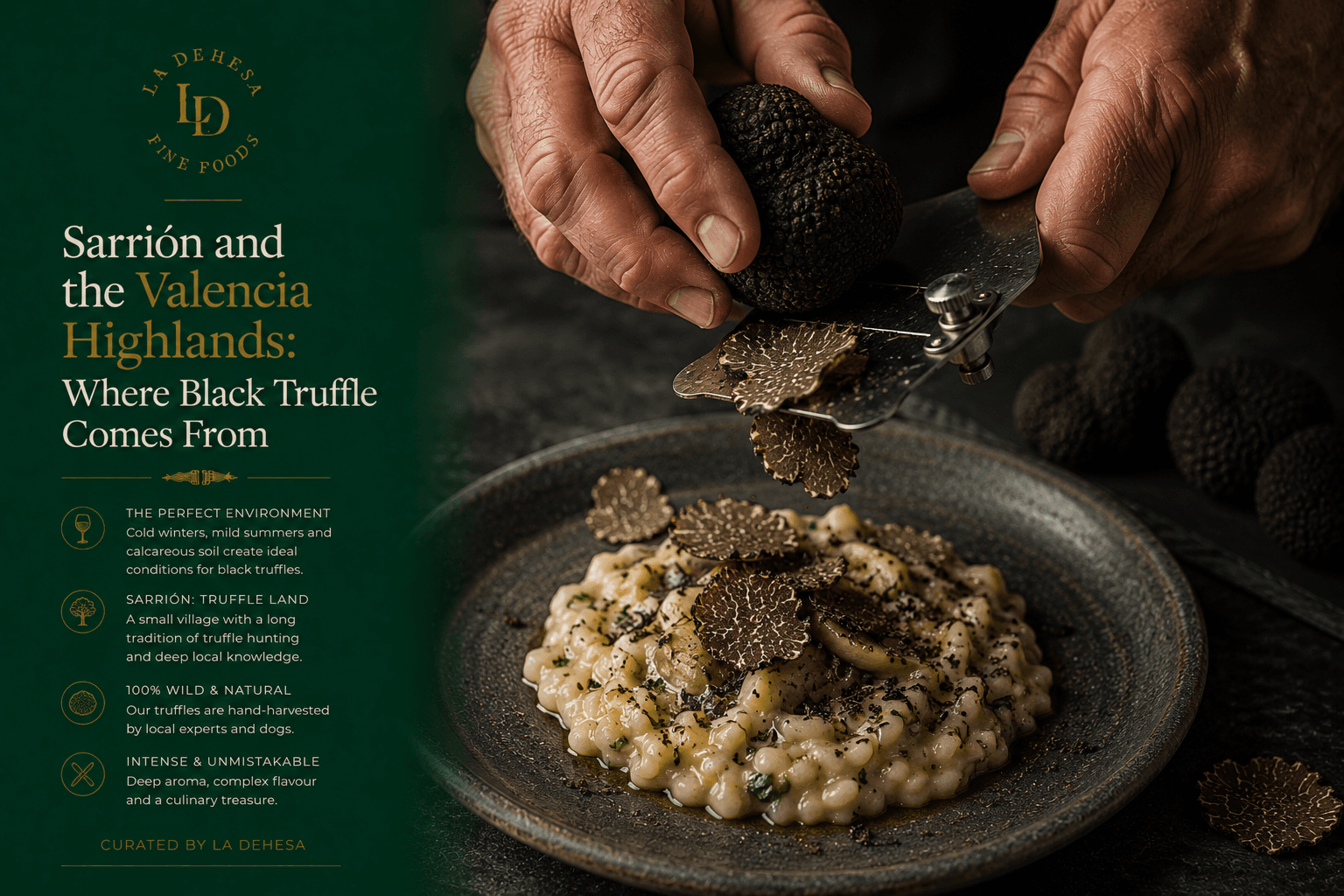
Teruel sits in Aragón, away from the coast and high enough to matter. The landscape is austere, cold, and dry enough to suit the black truffle's life cycle. Oaks and hazels provide the host trees, while the limestone base encourages the fungus to develop underground in a way that gives the tuber its deep, earthy aroma. That relationship between tree, soil, and climate is the foundation of the region's quality.
The winter season is part of the point. Black truffle is not a random pantry ingredient that appears on demand. It is a seasonal crop whose aroma changes with the weather, the maturity of the soil, and the timing of the harvest. The best examples are lifted at the right moment, cleaned carefully, and moved quickly. If the buyer does not respect that rhythm, the ingredient turns into a compromise instead of a signature.
For Irish trade buyers, Teruel offers a useful kind of certainty. It is a named place with a clear truffle identity, not a generic truffle origin. That makes it easier to brief the kitchen, easier to explain to guests, and easier to align with winter menus that need a short burst of luxury rather than a year-round promise.
The hunters and handlers
The truffle hunt is still a craft of observation. Dogs find the scent below ground, but the human work starts the moment the soil is lifted. A good hunter knows how to remove the truffle without damaging it, and a good handler knows how to grade it by aroma, firmness, and shape. That discipline matters because truffle loses value quickly if it is bruised, overhandled, or left too long before use.
La Dehesa sources from people who understand that the buyer is not purchasing a story alone. The product has to perform on the pass. That means clean flesh, strong aroma, and a level of maturity that makes the truffle useful in a real kitchen. The buyer should not need to guess whether the product will hold once it reaches the prep table. The region and the handler should already have done that work.
How to Source Truffle Without the Guesswork
Black truffle works in Ireland when it is treated as a seasonal menu event rather than a decorative garnish. It can sharpen a winter tasting menu, lift a pasta or potato dish, or give a short run of special dishes enough identity to justify attention. The ingredient gives a chef a clear reason to say that the menu is changing with the season, which is often what a guest wants to hear in the colder months.
It also works because the flavour is so recognisable when used well. A small amount can change the perception of butter, egg, cheese, or a rich sauce. That means the kitchen can keep the dish restrained and still create a sense of luxury. For Irish buyers, that is useful because the product delivers impact without demanding a full rebuild of the plate.
Seasonal buying
The smartest truffle buyer plans the menu before the season gets busy. That means knowing when the first clean supply is likely to land, which dishes can carry the ingredient without turning clumsy, and how much the kitchen can actually move while the aroma is at its peak. Truffle rewards discipline. It does not reward panic buying at the wrong moment.
Storage and turnover matter too. The product should be kept cold, protected from excess moisture, and used quickly enough that the aroma stays alive. If the kitchen treats truffle as a central ingredient in a short seasonal run, it usually gets better value than if it treats it as a late add-on. La Dehesa helps Irish chefs make that timing easier to manage.
What to look for / How to buy it
Look for firmness, an earthy aroma, and a clean surface. The truffle should smell alive, not flat or damp. It should be used quickly and stored properly in a sealed container with absorbent paper changed regularly. Ask when it was harvested and whether the product is being offered during the right part of the season. If the answer is vague, the truffle is probably not the right one.
Buy for the menu you actually run. A tasting menu, a Sunday roast feature, and a short winter special all need different levels of truffle input. The right buyer will know the difference between a one-night special and a product that deserves repeated use through the season. That is the kind of clarity La Dehesa brings to the Irish trade.
Final trade note
Truffle loses value when the kitchen treats it like an afterthought. The right approach is to decide early which dishes can carry it and how long the dish will be on the menu. That makes the season easier to manage and keeps the truffle in the area where it has the most impact: short, controlled, and memorable.
A good Irish truffle offer should never feel like a novelty garnish. It should feel like the kitchen knows exactly what it wants to say in winter. That is why the region, the harvest, and the handling matter so much. They give the chef enough certainty to use the ingredient with restraint.
- Plan the menu before the first delivery lands.
- Use the truffle where a small amount changes the whole dish.
- Keep handling and storage tight so the aroma stays alive.
Related reading
La Dehesa supplies black truffles from Teruel directly to Irish restaurants and retailers. Request a sample or wholesale price list: hello@ladehesa.com
Trade Enquiries
Get the La Dehesa brochure
Tell us your venue type and receive the current product range.
Browse the full range of Origin Verified Spanish products on the products page, or learn about our sourcing approach on the about page. Find out why Irish hospitality partners choose La Dehesa on why us.
Interested in listing these products at your venue?